


We ship worldwide - see checkout for options

Exceptional customer service trusted by 100's
£49.95
We ship worldwide - see checkout for options
Exceptional customer service trusted by 100's
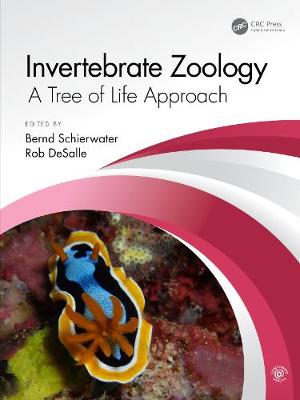
Invertebrate Zoology: A Tree of Life Approach is a comprehensive and authoritative textbook adopting an explicitly phylogenetic organization. Most of the classical anatomical and morphological work has not been changed – it established the foundation of Invertebrate Zoology. With the explosion of Next-Generation Sequencing approaches, there has been a sea-change in the recognized phylogenetic relationships among and between invertebrate lineages. In addition, the merger of evolutionary and developmental biology (evo-devo) has dramatically contributed to changes in the understanding of invertebrate biology. Synthesizing these three approaches (classical morphology, sequencing data, and evo-devo studies) offers students an entirely unique perspective of invertebrate diversity. Key Features One of the first textbooks to combine classical morphological approaches and newer evo-devo and Next-Generation Sequencing approaches to address Invertebrate Zoology Organized along taxonomic lines in accord with the latest understanding of invertebrate phylogeny Will provide background in basic systematic analysis useful within any study of biodiversity A wealth of ancillary materials for students and teachers, including downloadable figures, lecture slides, web links, and phylogenetic data matrices
| Weight | 1.72 kg |
|---|---|
| Author | |
| Editor | |
| Photographer | |
| Format | |
| Illustrators | |
| Publisher |
Only logged in customers who have purchased this product may leave a review.

Paperback
£7.95
Paperback
Original price was: £19.95.£13.95Current price is: £13.95.In Stock

Paperback

Paperback
£29.75
Hardback
Original price was: £92.00.£69.00Current price is: £69.00.

Hardback
£16.50
Hardback
£12.95In Stock
Reviews
There are no reviews yet.