


We ship worldwide - see checkout for options

Exceptional customer service trusted by 100's
£199.95
We ship worldwide - see checkout for options
Exceptional customer service trusted by 100's
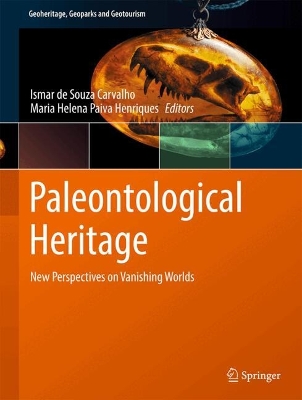
Fossils are more than remnants of vanished worlds and can take on a wide range of meanings; they represent scientific data, cultural heritage, and economic resources, besides inspiring myths and provoking astonishment and admiration. Because of their rarity, preservation, location, and public interest, their geoheritage significance presents variable contours and is subject to change. By adding intangible value, modern analytical methods turn fossils into knowledge that transcends their physical form. This book, Paleontological Heritage: New Perspectives on Vanishing Worlds, edited by Ismar de Souza Carvalho and Maria Helena Paiva Henriques, offers a unique contribution to geological and paleontological heritage studies. It distinguishes between fossils and paleontological heritage, addressing legislation, ethics, and socio-economic conflicts that shape and restrict the activities of collecting and handling fossils. Chapters explore in-situ and ex-situ geoheritage, fossil collections, management challenges, and global perspectives. They examine fossils in myths, religion, medicine, jewelry, art, and even artificial intelligence. The work highlights ethical dilemmas and tensions between science and economy, including fossil use in mineral exploitation. It bridges micro- and macropaleontological heritage, revealing the invisible and visible worlds of ancient life. Contributions from researchers across Brazil, China, England, France, Italy, Morocco, Portugal, Russia, and Spain ensure a global scope to Paleontological Heritage: New Perspectives on Vanishing Worlds. No other book integrates concepts, legislation, and practical uses of fossils as geoheritage assets in this way. It invites scientists, policymakers, educators, and the public to engage with fossils as living heritage shaping our future.
| Weight | 1.470609 kg |
|---|---|
| Author | |
| Editor | |
| Photographer | |
| Format | |
| Illustrators | |
| Publisher |
Only logged in customers who have purchased this product may leave a review.
Paperback
Original price was: £59.00.£44.50Current price is: £44.50.
Paperback
£10.00

Paperback
£8.95 CD-ROM
£40.00 Paperback
£3.50 Book
£72.00 Paperback
£6.00
Reviews
There are no reviews yet.