


We ship worldwide - see checkout for options

Exceptional customer service trusted by 100's
£179.95
We ship worldwide - see checkout for options
Exceptional customer service trusted by 100's
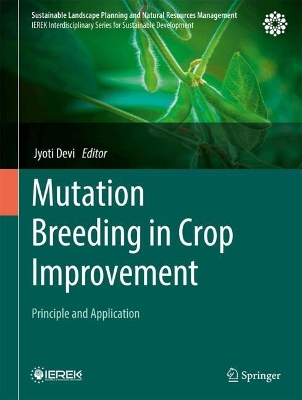
This book is useful for post-graduate students, teachers, and researchers, including those working for seed and biotechnology firms. Mutagenesis has been extensively employed to create variety and uncover crucial regulatory genes or the purpose of improving crops. Among the several techniques now in use, mutagenesis and mutation breeding in conjunction with conventional breeding programs can result in mutant varieties with fresh and appealing agronomical trait qualities. This environment is highly suited for induced mutations and its related technologies, and the whole approach helps to track crop genetic variation and maintain biodiversity. Mutagenesis is an important technique for increasing genetic variation, which is necessary for breeders to develop new varieties. Novel allelic variation can be created by random or targeted mutagenesis. Apparently, random mutagenesis seems to be out of date because clustered regularly interspaced short palindromic repeats (CRISPR)—Cas technology has the potential to be faster and far more precise. Targeted mutagenesis offers advantages like targeting one gene (family) only, inducing multiple mutations simultaneously, and avoiding background mutations. Regretfully, due to legal restrictions, breeders cannot access genome editing in many countries. Therefore, random mutagenesis continues to be an essential technique for generating novel allelic variation. However, the application of mutant offspring in polyploid crops is limited, as multiple mutations are usually needed, and they suffer from a high mutation load. Recent technological developments, such as sequence-based mutant screening and genomic background selection, have made it more effective to take advantage of random mutations. The book discusses both fundamental and practical elements of random and targeted mutagenesis. All of the noteworthy and pertinent literature in the area is included in this book.
| Weight | 0.5 kg |
|---|---|
| Author | |
| Editor | |
| Photographer | |
| Format | |
| Illustrators | |
| Publisher |
Only logged in customers who have purchased this product may leave a review.
Paperback
£17.00

Paperback
Original price was: £15.00.£10.00Current price is: £10.00.In Stock

CD
£0.00
Hardback
Original price was: £83.00.£76.95Current price is: £76.95.



Reviews
There are no reviews yet.