The Lost Ocean of the Himalaya: Fossils, Empire and Pilgrimage in the High Mountains

£39.95

Available for Pre-order. Due April 2027.

The Lost Ocean of the Himalaya: Fossils, Empire and Pilgrimage in the High Mountains Author: Format: Hardback First Published: Published By: Liverpool University Press
string(3) "352"
Pages: 352 Illustrations and other contents: col. illus. Language: English ISBN: 9781807811976 Categories: , ,

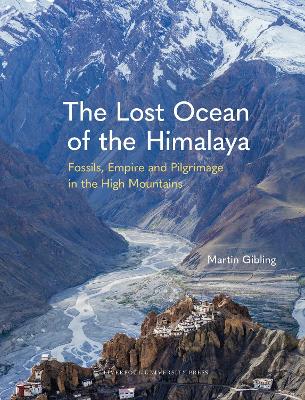
The Lost Ocean of the Himalaya traces the discovery and meaning of marine fossils found at the roof of the world. Some 200 million years ago, the Tethys Ocean lay between Asia and the drifting continent of India. As the landmasses collided, the ocean floor was thrust upward, carrying its fossils to the summit of Everest. Today, ammonites from Tethys are gathered as scientific specimens by geologists and as shaligrams by Himalayan pilgrims, who venerate them as living embodiments of Vishnu. Drawing on his diary from the 1991 Lost Ocean Expedition, Martin Gibling retraces a route through the High Himalaya, interweaving this personal account with the history of Himalayan geology: the Scottish soldiers who first identified ammonites after 1816, the naturalists and surveyors who followed, and the eventual understanding of the Himalaya as a product of continental collision. Throughout, the book sets this scientific history alongside the sacred and cultural traditions through which Himalayan peoples have long understood the landscape, examining how geological science developed within colonial power structures. Martin Gibling is Professor Emeritus at Dalhousie University. His research has taken him to many parts of Asia, and he is the author of River Planet: Rivers from Deep Time to the Modern Crisis.

Weight0.9464 kg
Author

Editor
Photographer
Format

Illustrators
Publisher

Reviews

There are no reviews yet.

Only logged in customers who have purchased this product may leave a review.

"Gibling’s work reminds us that the study of the Earth isn’t just about rocks, but about time both long and short. Looking back on his own long career as a scientist, all the while considering the millions of years of tectonic activity on which he stands, this book is a masterpiece of geology, human history, and religion. And within all that, lie the remarkable stories of prospectors and pilgrims, all seeking answers to their own places in a broader cosmology nestled within a Himalayan landscape that is simultaneously at the bottom of the sea and at the top of the world. A place where mountains and fossils are gods and their rivers feed the blood of the world. The Lost Ocean of the Himalaya isn’t another dusty academic book destined for an obscure library shelf. It’s an invitation for all of us to walk the unfathomable paths of time" - ** Dr. Holly Walters, Department of Anthropology, Wellesley College "This book is a fascinating web of thought-provoking strands woven together around a group of geologists on an expedition to the Himalayas in the 1990s. The scientific side of the story traces the evolution of European thoughts about fossils, from the world of Mary Anning’s Dorset coast in England to the limestones near the top of Mt Everest, through the life and death of the British Empire. Ideas about ancient waters have evolved from the biblical flood to the plate tectonic creation of the High Himalaya via the sea floor of the Southern Hemisphere. In this book the geologists are on a scientific pilgrimage to examine the ancient life and times of famous ammonite fossils. They share their geological “shrine” with the Buddhist and Hindu pilgrims who have been seeking for a thousand years exactly the same fossils, conceived by them in an entirely different cosmology and culture. Gibling reflects on our place in the mountains as the world becomes smaller; as well as a lost ocean, there are losses of wilderness and ancient cultures as new roads have crept ever further into the high valleys. And now global warming is increasingly sending devastating floods down those valleys. Which approach to the world is going to best facilitate our progress into the Anthropocene?” - Professor Dave Craw, Department of Geology, University of Otago, Ōtākou Whakaihu Waka

Author Biography

Martin Gibling is Professor Emeritus at Dalhousie University. His research has taken him to many parts of Asia, and he is the author of River Planet: Rivers from Deep Time to the Modern Crisis.