


We ship worldwide - see checkout for options

Exceptional customer service trusted by 100's
Original price was: £85.00.£79.00Current price is: £79.00.
We ship worldwide - see checkout for options
Exceptional customer service trusted by 100's
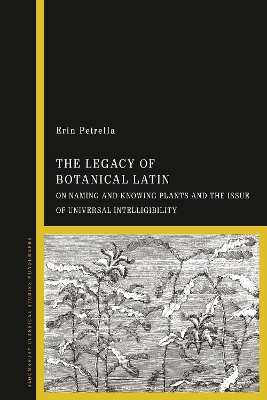
Tracing the development of botanical Latin and nomenclature from antiquity until the present day, this book interrogates the long-standing notion of universal intelligibility – the idea that when one is describing, illustrating and naming plants, they are able to be understood by anyone.
The field of botany has used Latin as a language of expression since its inception in the late 15th century. By the 20th century, however, botanical Latin had become little more than a set of rules and recommendations for the composition of scientific names and diagnoses. This, combined with the waning of Latin as a lingua franca, had an unexpected result: the collapse of the ideal of universal intelligibility, which had long been assumed to be embedded in the Latin language.
Erin Petrella looks at the origins of this ideal, along with other key features of botany, from antiquity through the Renaissance, up to the contemporary scientific discourse, which addresses philosophical and political issues such as decolonization and the re-privileging of indigenous methods and naming conventions. Primarily studying the development and formalization of Latin as the language of botany, Petrella also focuses on the premise that plant names, descriptions and illustrations should all contribute to the plant’s discoverability and knowability.
| Weight | 0.4891536 kg |
|---|---|
| Author | |
| Format | |
| Publisher |
Only logged in customers who have purchased this product may leave a review.

Paperback
£17.00

Paperback
Original price was: £15.00.£10.00Current price is: £10.00.In Stock

Paperback
£0.00

CD
£0.00


Reviews
There are no reviews yet.