


We ship worldwide - see checkout for options

Exceptional customer service trusted by 100's
£117.95
We ship worldwide - see checkout for options
Exceptional customer service trusted by 100's
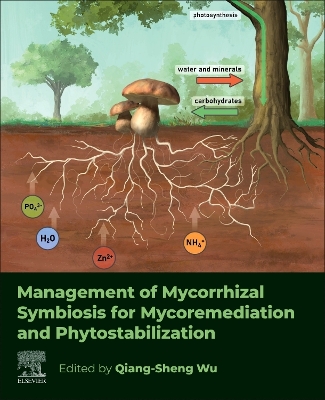
Management of Mycorrhizal Symbiosis for Mycoremediation and Phytostabilization overviews the many advances that have been made in mycorrhizal research and practice. Many microorganisms are present in plant rhizosphere, among which root-associated mycorrhizal fungi are ancient fungi that have evolved along with the evolution of plants. Mycorrhizal fungi of the soil can colonize more than 80% of terrestrial plant roots, where the mycorrhizal symbiosis helps the host to obtain water and nutrients, in exchange of lipids and sugars from the host plant to the mycorrhizal fungus for its life history. The mycorrhizal extraradical mycelium can extend beyond the root zone, enabling the absorption of water and nutrients from the soil. Thus, the reciprocal symbiosis can provide an important technology for crop reduction of fertilizer inputs and environmental stewardship. Mycorrhizal fungal fertilizers have been produced commercially in Europe, Asia, and North America, which provides strong support for mycorrhizal applications in agriculture and environmental field. Therefore, there is a great need to summarize the recent research results and bring them together in a book. This book provides soil scientists and mycorrhizal researchers with a comprehensive overview of new advances in mycorrhizal fungi. It may also serve as a reference for professionals in adjacent fields working in environmental management, microbiology, and crop science.
| Weight | 0.8124185 kg |
|---|---|
| Author | |
| Editor | |
| Photographer | |
| Format | |
| Illustrators | |
| Publisher |
Only logged in customers who have purchased this product may leave a review.
Paperback
Original price was: £54.95.£49.95Current price is: £49.95.In Stock

Paperback
£74.00
Paperback
£82.95
Hardback
Original price was: £127.50.£115.00Current price is: £115.00.
Paperback
Original price was: £20.95.£15.95Current price is: £15.95.
Hardback
£24.00
Hardback
£80.00
Hardback
£25.00

Reviews
There are no reviews yet.