


We ship worldwide - see checkout for options

Exceptional customer service trusted by 100's
£26.95
We ship worldwide - see checkout for options
Exceptional customer service trusted by 100's
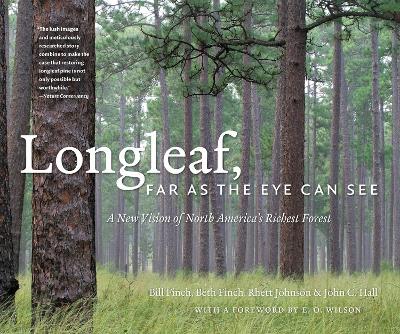
Longleaf forests once covered 92 million acres from Texas to Maryland to Florida. These grand old-growth pines were the “alpha tree” of the largest forest ecosystem in North America and have come to define the southern forest. But logging, suppression of fire, destruction by landowners, and a complex web of other factors reduced those forests so that longleaf is now found only on 3 million acres. Fortunately, the stately tree is enjoying a resurgence of interest, and longleaf forests are once again spreading across the South. Blending a compelling narrative by writers Bill Finch, Rhett Johnson, and John C. Hall with Beth Finch’s breathtaking photography, Longleaf, Far as the Eye Can See invites readers to experience the astounding beauty and significance of the majestic longleaf ecosystem. The authors explore the interactions of longleaf with other species, the development of longleaf forests prior to human contact, and the influence of the longleaf on southern culture, as well as ongoing efforts to restore these forests. Part natural history, part conservation advocacy, and part cultural exploration, this book highlights the special nature of longleaf forests and proposes ways to conserve and expand them.
| Weight | 0.5 kg |
|---|---|
| Author | |
| Editor | |
| Photographer | |
| Format | |
| Illustrators | |
| Publisher |
Only logged in customers who have purchased this product may leave a review.

Paperback
£9.50
Hardback
Original price was: £67.00.£59.95Current price is: £59.95.
Hardback
Original price was: £18.99.£15.00Current price is: £15.00.
Paperback
Original price was: £16.99.£16.95Current price is: £16.95.In Stock

Paperback
Original price was: £15.00.£14.50Current price is: £14.50.In Stock

Paperback
£37.95

Reviews
There are no reviews yet.