


We ship worldwide - see checkout for options

Exceptional customer service trusted by 100's
£179.95
We ship worldwide - see checkout for options
Exceptional customer service trusted by 100's
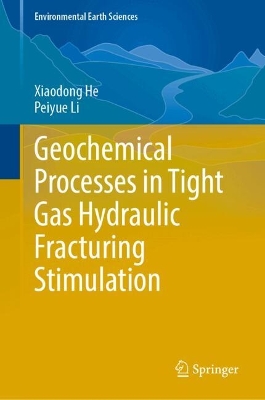
This book examines the Sulige Gas Field—China’s largest natural gas field—as a case study. Drawing on field hydraulic fracturing data and laboratory water–rock interaction experiments, it systematically investigates the geochemical processes occurring during hydraulic fracturing. These processes are analyzed using X-ray fluorescence spectroscopy (XRF), X-ray diffraction (XRD), scanning electron microscopy (SEM), geochemical modeling, end-member mixing analysis, and isotopic tracing. In addition, the book explores regional water environmental issues triggered by hydraulic fracturing, as well as strategies for managing and utilizing flowback water resources. The findings provide a theoretical foundation and technical support for the green and sustainable development of unconventional energy resources, while significantly advancing the understanding of geochemistry in deep subsurface environments. By bridging fundamental geochemistry and practical engineering, this book offers actionable insights for reservoir engineers, geochemists, and policymakers to address environmental and engineering challenges effectively.
| Weight | 0.5500175 kg |
|---|---|
| Author | |
| Editor | |
| Photographer | |
| Format | |
| Illustrators | |
| Publisher |
Only logged in customers who have purchased this product may leave a review.

Paperback
Original price was: £89.95.£84.95Current price is: £84.95.
Paperback
£7.50
Paperback
£10.95 Hardback
£15.00
Paperback
£20.00
Paperback / softback
£119.95
Hardback
£125.00
Hardback
£37.50
Reviews
There are no reviews yet.