

We ship worldwide - see checkout for options

Exceptional customer service trusted by 100's
Original price was: £60.00.£49.00Current price is: £49.00.
We ship worldwide - see checkout for options
Exceptional customer service trusted by 100's
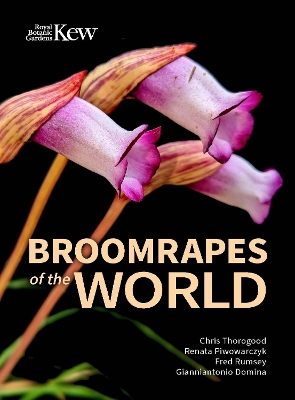
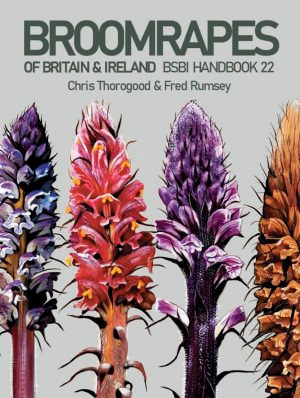
Broomrapes and their relatives (family Orobanchaceae) are particularly striking and interesting plants, as well as being some of the least understood in terms of their biology, their lifestyle and their influence on local plant communities. They are parasitic on, and attach to the roots of, other plants to extract nutrients. With many diverse species, from the woodland-dwelling toothwort to the hardy desert hyacinth, they can be found in every biome in the world but often pose a challenge for identification.
Plants appearing to be distinct in the field, become featureless as a herbarium specimen, producing a poor type specimen and inadequate description. Incorrect determination, intra-specific variation in some species, and inconsistent naming only add to the confusion. However, the authors believe that identification in the field is possible with careful examination.
Over 400 species of broomrapes are holoparasites.They lack chlorophyll and so derive all their essential nutrients from the host plant. Ninety percent of broomrapes are hemiparasites and are not wholly dependent on the host for assimilates. To reduce the scope of the book to one volume, the authors have followed a broad classification and focused only on holoparasites.
The result is a practical guide that reveals these taxonomically challenging species with clarity and precision to experts and amateurs alike.
Broomrapes of the World is illustrated throughout with 600 colour photographs, each species profile includes habit, morphology, ecology, distribution, key diagnostics and similar species.
| Weight | 2.2 kg |
|---|---|
| Author | |
| Format | |
| Publisher |
Only logged in customers who have purchased this product may leave a review.

Hardback
£80.00
Paperback
£0.00
Hardback
Original price was: £23.00.£17.95Current price is: £17.95.
Paperback
Original price was: £88.00.£76.95Current price is: £76.95.
Paperback
£82.95
Hardback
Original price was: £79.00.£59.00Current price is: £59.00.
Hardback
£0.00
Hardback
£0.00
Paperback / softback
Original price was: £37.95.£34.95Current price is: £34.95.In Stock
Paperback
Original price was: £17.50.£17.00Current price is: £17.00.In Stock

Reviews
There are no reviews yet.