


We ship worldwide - see checkout for options

Exceptional customer service trusted by 100's
£109.95
We ship worldwide - see checkout for options
Exceptional customer service trusted by 100's
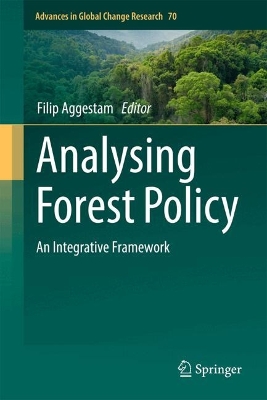
Forests have become a key topic in ongoing debates about sustainability, as they lie at the intersection of climate change, biodiversity loss, competing land uses and evolving demands on the bioeconomy. In Europe and around the world, forest governance is increasingly influenced by overlapping policy areas, multi-level and cross-sectoral institutional structures, and conflicting societal expectations and demands. These pressures raise an important question: what constitutes transformative change in forest governance, and how can it be achieved in practice? This edited volume provides an integrative, analytically grounded account of European forest policy and governance, combining conceptual foundations with empirical and cross-cutting perspectives. The initial chapters clarify theoretical approaches in forest policy research and introduce transformation-oriented frameworks. The book then examines governance in practice within the European Union (EU), where forest-related policymaking is characterised by institutional fragmentation, policy layering, and competing narratives relating to climate, biodiversity, agriculture, trade, and energy. Subsequent chapters address the various factors that influence forest governance outcomes, including forest ownership and tenure, communication and legitimacy, digitalisation and data infrastructures, and the evolving role of criteria and indicators in monitoring and accountability. Synthesising insights from these contributions, the book presents an integrative framework for analysing transformative forest governance and identifies priorities for future research and policy. This book will be valuable to researchers, graduate students and practitioners working in forest governance, environmental policy and sustainability transitions.
| Weight | 0.54091125 kg |
|---|---|
| Author | |
| Editor | |
| Photographer | |
| Format | |
| Illustrators | |
| Publisher |
Only logged in customers who have purchased this product may leave a review.

Hardback
Original price was: £18.00.£15.95Current price is: £15.95.
Hardback
Original price was: £25.00.£19.00Current price is: £19.00.In Stock

Paperback
£26.00
Hardback
£167.50
Hardback
Original price was: £18.99.£15.00Current price is: £15.00.
Hardback
£14.95


Reviews
There are no reviews yet.