
Institutional Landscapes of Empire in Ancient Iran

£60.00

Available for Pre-order. Due October 2026.

Institutional Landscapes of Empire in Ancient Iran Editors: Stefan R. Hauser, Wouter F.M. Henkelman, Giuseppe Labisi Format: Paperback / softback First Published: Published By: Sidestone Press
string(3) "320"
Pages: 320 Illustrations and other contents: 102fc / 28bw Language: English ISBN: 9789464271744 Categories: ,

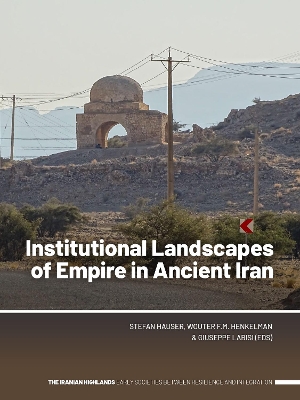
This volume, containing the proceedings of a conference held in July 2022 in Istanbul, addresses and refines the concept of ‘institutional landscapes’ as they were created in Iran by the Achaemenid and Sassanian empires (with an excursus into the Ilkhanid period). It describes large-scale transformations of the physical landscape in terms of hydrological infrastructure, roads, large-scale plantations and settlement structures. It addresses specific nodes in the administrative network and associated forms of control such as estates, fortresses and fire temples. It wides the scope of the concept of institutional landscapes to manifestations of authority in the form of monumental architecture but also in that of agents of the crown roaming the countryside. The conference and the present volume are the fruits of the DFG-funded Iranian Highlands program (SPP 2176); they bear witness to the enduring and productive cooperation between Iranian and non-Iranian scholars of ancient Iran. This book is the fourth volume of a series published by the German-Iranian research cooperation “The Iranian Highlands: Resiliences and Integration in Premodern Societies”. The goal of the research project is to shine a new light on communities and societies that populated the Iranian highlands and their more or less successful strategies to cope with the many vagaries, the constant changes and risks of their natural and humanly shaped environments.

Weight0.97608 kg
Author
Editor
Photographer
Format

Illustrators
Publisher

Reviews

There are no reviews yet.

Only logged in customers who have purchased this product may leave a review.
Author Biography

Stefan R. Hauser is professor of Mediterranean and Near Eastern Archaeology at the University of Konstanz. His publications cover the Neo-Assyrian to the Early Islamic period with a particular emphasis on the Arsacid Empire, and a strong interest in the history of research. He was PI of a project on resilience and transformation in the Bozpar Valley (SPP Iranian Highlands). He currently directs projects in Alexandria-on-theTigris/Charax Spasinou (Iraq) and on Sasanian manor houses and fire temples in Iran. Trained as a classical philologist and ancient historian at the universities of Leiden and Utrecht, Wouter Henkelman graduated from the former in 2006 with a dissertation entitled The other gods who are, which explores cases of Elamite-Iranian acculturation. He is currently associate professor of Elamite and Achaemenid studies at the École Pratique des Hautes Études (4e section; since 2012); he is also director of the Sarikhani Centre for Elamite Studies at the same institution (since 2024). Outside Paris, he is co-director (alongside Mark Garrison) of the Persepolis Fortification Archive Project. Among his various research interests are Achaemenid administration, Elamite philology, Elamite and Achaemenid epigraphy, and Greek historiography on the Persian Empire. Born in Vittoria (Italy) in 1987, Giuseppe Labisi is an archaeologist who obtained his PhD in Islamic archaeology jointly at the Sapienza University of Rome and the Panthéon-Sorbonne University of Paris in 2017. He additionally obtained the professorship qualification in archaeology (in Italy) in 2023. Since 2020, he is postdoctoral researcher at the University of Konstanz (Germany) and since 2022 associate member of the Polen Research Centre (UR 4710), University of Orléans (France). His research focuses on the Sasanian-Islamic and Byzantine-Islamic transitions with an emphasis on architecture, although it also covers other topics such as landscape and ancient road systems, settlement dynamics and material culture. He has been the coordinator of the research project on the Bozpar Valley (Iran, directed by Stefan R. Hauser, University of Konstanz) from 2020 to 2024, he is member of the “Chartaq Research Project” (directed by Stefan R. Hauser) and co-director of the research project on Monte Altesina (Italy, directed with Anna Caiozzo). His publications include the monograph Dwelling Models of Umayyad Madāʾin and Quṣūr in Greater Syria (published for the British Archaeological Reports, International Series).