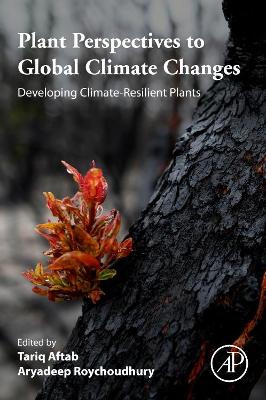

Plant Perspectives to Global Climate Changes: Developing Climate-Resilient Plants

£155.00

Usually more than 2 weeks to dispatch

Plant Perspectives to Global Climate Changes: Developing Climate-Resilient Plants Editors: Tariq Aftab, Aryadeep Roychoudhury Format: Paperback / softback First Published: Published By: Elsevier Science & Technology
string(3) "556"
Pages: 556 Language: English ISBN: 9780323856652 Categories: , , , , ,

Plants face a wide range of environmental challenges, which are expected to become more intense as a result of global climate change. Extensive research on ecological and environmental plant physiology has provided mechanistic understanding of the survival, distribution, productivity, and abundance of plant species across the diverse climates of our planet. Advancing ecophysiological understanding and approaches to enhance plant responses to new environmental conditions is critical to developing meaningful high-throughput phenotyping tools and maintaining humankind’s supply of goods and services as global climate change intensifies. Plant Perspectives to Global Climate Changes: Developing Climate-Resilient Plants reviews and integrates currently available information on the impact of the environment on functional and adaptive features of plants from molecular, biochemical, physiological to the whole plant level. The book also provides a direction towards implementation of programs and practices that will enable sustainable production of crops, resilient to climatic alterations. This book will be beneficial to academics and researchers working on stress physiology, stress proteins, genomics, proteomics, genetic engineering, and other fields of plant physiology.

Weight1.11 kg
Author
Editor
Photographer
Format

Illustrators
Publisher

Reviews

There are no reviews yet.

Only logged in customers who have purchased this product may leave a review.

Author Biography

Tariq Aftab received his PhD from the Department of Botany at Aligarh Muslim University, India, where he is currently a Senior Assistant Professor. He is the recipient of a prestigious Leibniz DAAD fellowship from Germany, a Raman Fellowship from the Government of India, and Young Scientist Awards from both the State Government of Uttar Pradesh and the Government of India. He has also served as a Visiting Scientist at IPK Gatersleben, Germany, and in the Department of Plant Biology at Michigan State University, United States. Dr. Aftab has edited numerous books for major international publishers, including Elsevier, Springer Nature, and CRC Press. He has co-authored several book chapters and published extensively in peer-reviewed, international journals. His research interests include physiological, proteomic, and molecular studies on medicinal and crop plants. Aryadeep Roychoudhury is currently serving as Professor in the Discipline of Life Sciences, School of Sciences, Indira Gandhi National Open University (IGNOU), New Delhi. Prior to joining IGNOU, he worked as Assistant Professor in the Postgraduate Department of Biotechnology at St. Xavier’s College (Autonomous), Kolkata. Prof. Roychoudhury completed his BSc (Honours) in Botany from Presidency College, Kolkata, and his MSc in Biophysics and Molecular Biology from the University of Calcutta. He obtained his PhD in Life Sciences from Bose Institute, Kolkata, under Jadavpur University, specializing in Plant Molecular Biology and Biotechnology. With over 25 years of research experience, his current work focuses on the physiological and molecular responses of plants under diverse abiotic stresses, including fluoride toxicity, heavy metals, salinity, and drought, with particular emphasis on cell signaling pathways, signaling molecules, and elicitors. In recognition of his scientific contributions, Prof. Roychoudhury received the Young Scientist Award (2019) from the International Foundation for Environment and Ecology at the University of Allahabad, Prayagraj, India. He was also awarded the Distinguished Scientist Award (2024) by the Institute of Ecotoxicology and Environmental Sciences, India. His name has been included in the Stanford–Elsevier’s World’s Top 2% Scientists list.