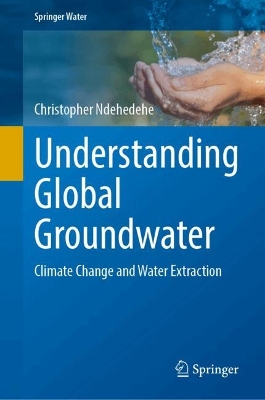

Understanding Global Groundwater: Climate Change and Water Extraction

£149.95

Available for Pre-order. Due April 2026.

Understanding Global Groundwater: Climate Change and Water Extraction Author: Format: Hardback First Published: Published By: Springer Nature Switzerland AG
NULL
Illustrations and other contents: 35 Illustrations, black and white Language: English ISBN: 9783032200280 Categories: , , ,

This book advances our understanding of global groundwater status, emphasizing the growing threats from unsustainable extraction and climate change. It highlights the central dilemma: groundwater is essential for socio-economic development, yet overuse leads to severe environmental and ecological consequences. With many aquifers rapidly declining, the book stresses the urgent need for advanced monitoring to better understand hydrological processes such as recharge, to inform stronger management policies. A major focus is the role of modern satellite hydrology missions in improving groundwater assessment. By integrating radar, Gravity Recovery and Climate Experiment (GRACE), and GNSS data with outputs from hydrological models, these technologies offer the capability to enhance our assessment of groundwater status, provide deeper insights into groundwater processes, and support sustainable decision-making. The book examines groundwater drought, articulating its principles and presenting methods for monitoring this phenomenon underpinned by machine learning techniques. Case studies illustrate how GRACE, combined with climate data, can clarify the links between climate variability and groundwater resources. Emerging techniques for assessing groundwater availability and drought impacts are also discussed. Another key contribution is the discussion on co-management of freshwater resources using satellite-based assessments. The book outlines pathways toward long-term groundwater sustainability through the integration of multi-satellite data with in-situ observations. It underscores the need for an operational service application to monitor groundwater drought and identify vulnerable regions. By bridging traditional groundwater science with advanced satellite Earth observation, this book provides essential insights into groundwater behavior in an era of climate change and population growth. It serves as a valuable resource for understanding the risks and actions needed to protect groundwater systems for future generations.

Weight0.5 kg
Author

Editor
Photographer
Format

Illustrators
Publisher

Reviews

There are no reviews yet.

Only logged in customers who have purchased this product may leave a review.
Author Biography

Dr Christopher Ndehedehe is a Senior Lecturer and an Australian Research Council (ARC) DECRA Fellow at the School of Environment & Science, Griffith University. He joined Griffith University's Australian Rivers Institute in mid-2018 under Griffith's Areas of Strategic Investment as a Research Fellow. This was after the completion of an outstanding PhD thesis, which received the Vice Chancellor's commendation in early 2018 at Curtin University. Christopher is a leading expert in satellite hydrology and environmental geo-informatics with a strong international reputation and experience. Christopher is ranked in the top 0.5% of all scholars worldwide by ScholarGPS in the field of Geomatic Engineering & Earth Sciences based on research impact and quality. He has been on the Stanford University list of Top 2% of leading scientists in the world for 3 consecutive years (2023–2025). Christopher has published widely in environmental remote sensing and satellite hydrology that connects climate, freshwater resources, and the environment. These include 2 Springer books, 4 book chapters, and more than 115 peer-reviewed articles in leading and high-impact factor (IF) English journals. Some of these journals include Nature (IF=69.50), Nature Sustainability (IF=27.70), The Lancet Planetary Health (IF=24.1), One Earth (IF=16.2), Remote Sensing of the Environment (IF=13.85), Communications Earth & Environment (IF=8.9), Earth's Future (IF=9.27), Pattern Recognition (IF=8.51), etc. His first Springer monograph is a leading and widely accessed book in the field of satellite hydrology with more than 21,000 downloads within 3 years of publication. Christopher is a recipient of prestigious international grants and awards, including the 2018 D. B. Johnston Award for Excellence in the Spatial Sciences area. He won the 2023 Griffith Sciences Pro Vice Chancellor's Excellence of an Early Career Researcher Award for outstanding performance in research. Christopher is a member of the American Geophysical Union (AGU) and has been funded as a keynote speaker at the prestigious AGU Chapman Conference. He leads the Satellite Earth Observation and Geomatic Group within the Australian Rivers Institute at Griffith University, pioneering several strategic research initiatives in remote sensing hydrology, including ARC-funded project grants (e.g., DE230101327, LP230100228). Christopher has provided leadership on several large consultancies and government projects, including those funded by the Australian Government and the Asian Development Bank. He has engaged and collaborated with international and local agencies, including the Earth Commission, where he contributed to quantifying safe and just Earth system boundaries. This research was published in Nature and has attracted increasing attention around the world, including coverage by more than 510 news outlets. He has also served as a water expert, contributing to water planning through research that was incorporated into a public consultation process for a Water Allocation Plan and that formed the basis of multiple submissions to the 2024 National Water Forum. Christopher is an Associate Editor of Resources, Environment and Sustainability (Elsevier) and Frontiers in Water and sits on the editorial board of Sustainable Horizons (Elsevier). He has also guest edited three special issues on remote sensing and climate-related subjects and continues to serve as a key grant assessor for international and government agencies across the world, including the ARC.