


We ship worldwide - see checkout for options

Exceptional customer service trusted by 100's
£56.00
We ship worldwide - see checkout for options
Exceptional customer service trusted by 100's
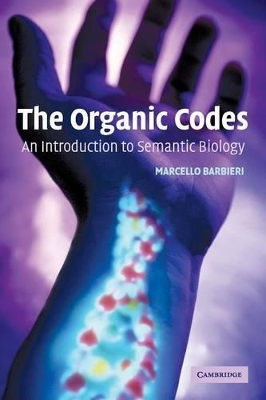
The genetic code appeared on Earth with the first cells. The codes of cultural evolution arrived almost four billion years later. These are the only codes that are recognized by modern biology. In this book, however, Marcello Barbieri explains that there are many more organic codes in nature, and their appearance not only took place throughout the history of life but marked the major steps of that history. A code establishes a correspondence between two independent ‘worlds’, and the codemaker is a third party between those ‘worlds’. Therefore the cell can be thought of as a trinity of genotype, phenotype and ribotype. The ancestral ribotypes were the agents which gave rise to the first cells. The book goes on to explain how organic codes and organic memories can be used to shed new light on the problems encountered in cell signalling, epigenesis, embryonic development, and the evolution of language.
| Weight | 0.43 kg |
|---|---|
| Author | |
| Editor | |
| Photographer | |
| Format | |
| Illustrators | |
| Publisher |
Only logged in customers who have purchased this product may leave a review.

Paperback / softback
£142.00
Paperback / softback
£21.95
Spiral bound
£222.50
Paperback / softback
£59.00 Paperback / softback
£16.50
Hardback
£133.00
Paperback / softback
£159.00
Paperback / softback
£45.00
Reviews
There are no reviews yet.