


We ship worldwide - see checkout for options

Exceptional customer service trusted by 100's
£40.00
We ship worldwide - see checkout for options
Exceptional customer service trusted by 100's
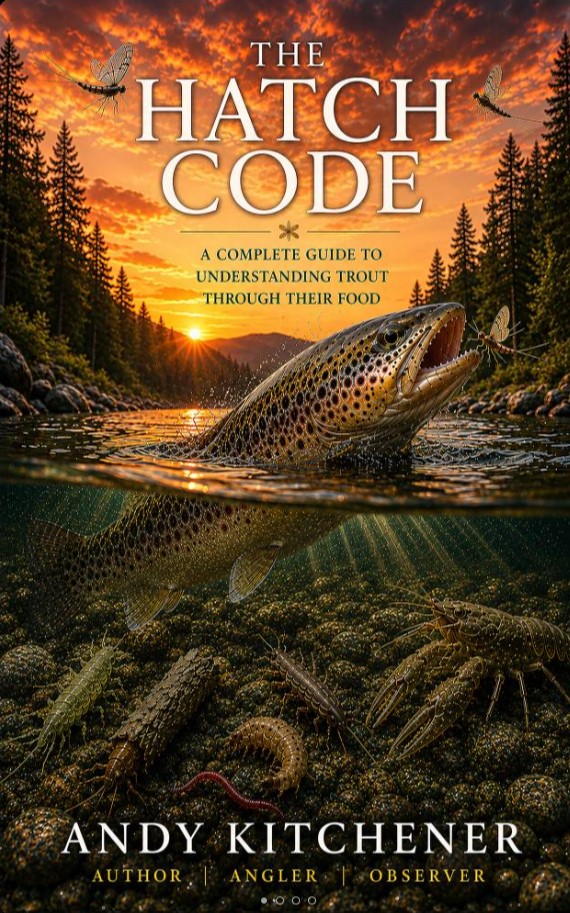
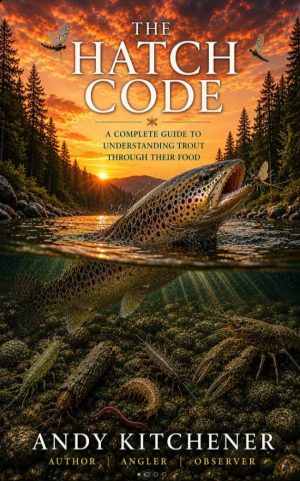
A trout does not read Latin. It reads vulnerability.
The Hatch Code: Trout Are Not Entomologists
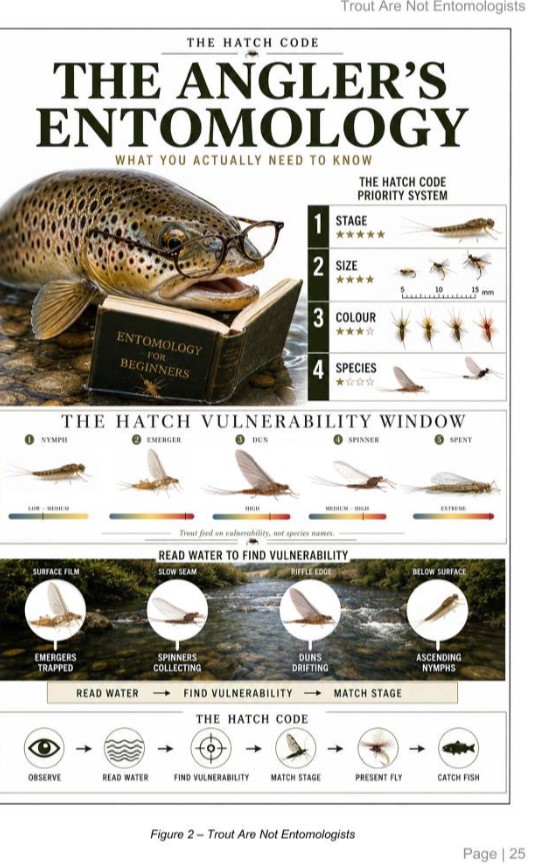
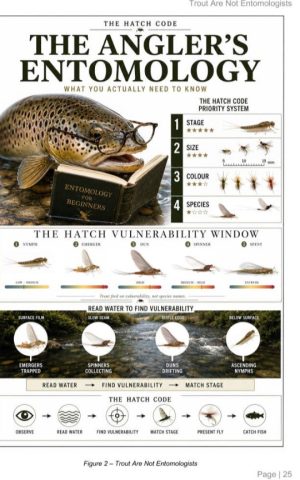
When a trout takes a fly from the surface it is answering four questions, in this order: what stage of its life is this insect in, how big is it, what colour is it — and only then, what species is it?
Most anglers are taught the opposite way round. Names first, behaviour later. The Hatch Code reverses that habit, and in doing so it turns fly selection from a memory test into something you can actually read off the water in front of you.
This is not an entomology textbook with fishing attached. It is a field manual for the angler standing in the river at four o’clock on a difficult afternoon, watching fish rise to something they cannot identify, working through a fly box that suddenly looks like a graveyard of rejected hopes. It teaches you to look — at the rise form, the light, the wind, the water temperature, the stage the insect is stuck in — and to reach for the right fly because you understand why, not because you remembered a name.
Twenty-four chapters across six parts, built to be read once and then used for years.
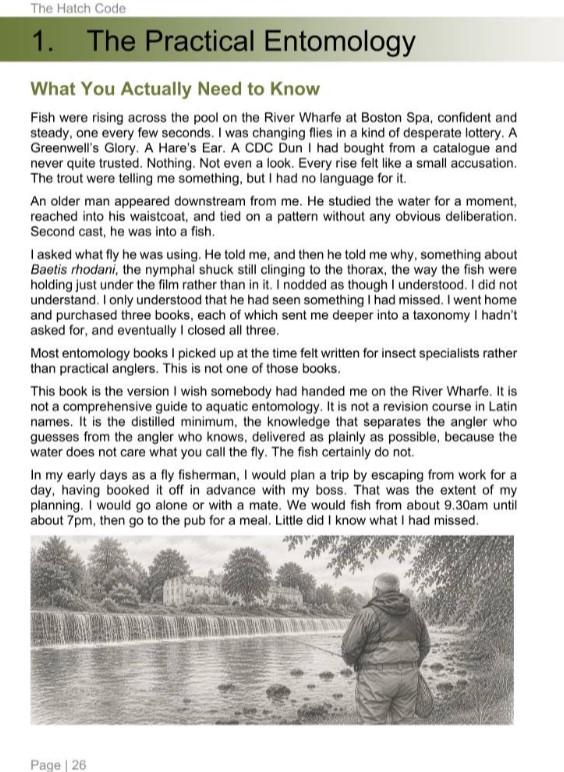
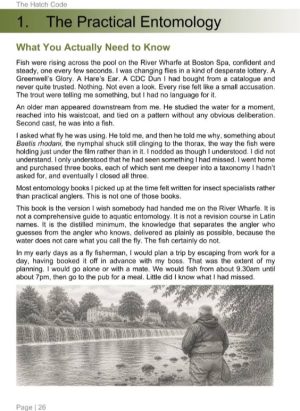
Part One — Reading Before Casting. Practical entomology stripped to what changes your fly choice. A five-minute audit you run on arrival. Reading the rise: what each rise form is actually telling you, and what it is not.
Part Two — Time, Weather, Water. The traditional hatch calendar, then the climate-changed one beside it — because the old dates no longer hold. Barometric pressure, wind, light and water temperature, and what each does to a hatch.
Part Three — The Main Food Groups. Olives, mayfly, sedges, midges and buzzers, beetles, crane flies, stoneflies, signal crayfish. Life cycles, timing, and the moment in each cycle when the fish are easiest to catch.
Part Four — Fishing Different Waters. Chalk-streams, Scottish lochs and rivers, reservoirs and stillwaters — each with its own rules, and its own reasons for them.
Part Five — Pattern Choice and Field Reference. Presentation, matching the hatch, and what to do when there is no hatch at all. Then the Quick-Reference Field Guides, designed to be used on the bank.
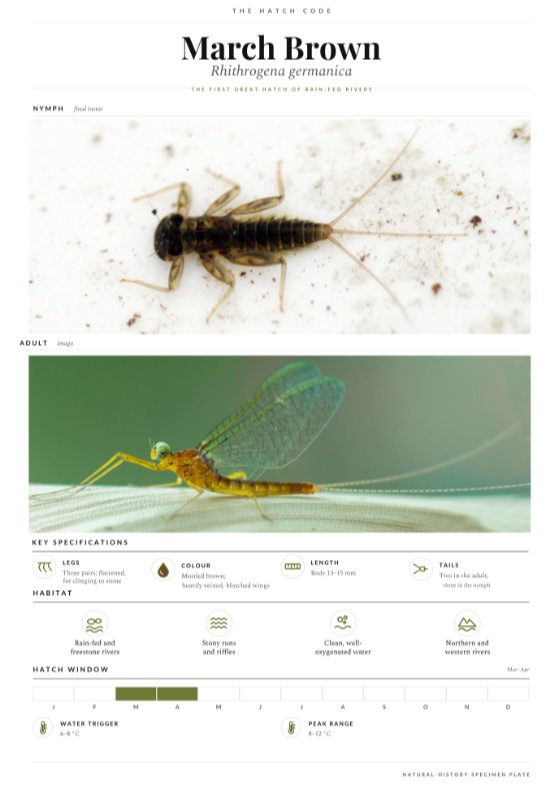
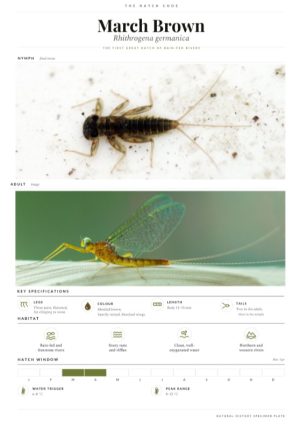
Part Six — Scientific Identification. Species plates built from original photographs, for identification and true colour, plus a full index.
Running through the whole book are 54 “Angler’s verdict” summaries — the practical bottom line of each section, in a sentence or two, for when you need the answer and not the argument.
Changing Waters: Pollution, Rivers and Hatches is the chapter the author warns you about in his own introduction. It sets out, with sources, what sewage discharge, agricultural run-off and rising water temperatures are doing to the insect life British fly fishing depends on — and what an angler standing on a bank can do about it.
It is blunt. It is meant to be. As the author puts it: “I apologise, but it is the reality of fishing today.”
The angler who has read the classics and still cannot work out why the fish refused. The improver who wants to stop guessing. The experienced fisher who suspects the hatch calendar they learned in the 1980s no longer describes the river they fish now. It assumes you can cast; it does not assume you know a Baetis from a Caenis, and by the end it will not matter, because you will know what to do either way.
| Weight | 0.839592 kg |
|---|---|
| Author | |
| Format | |
| Publisher |
Only logged in customers who have purchased this product may leave a review.
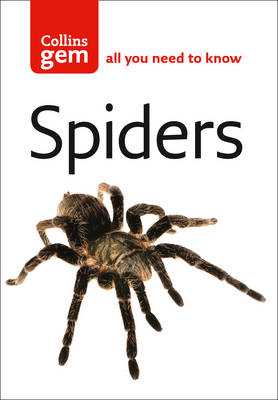
Paperback
£7.95
Hardback
£16.50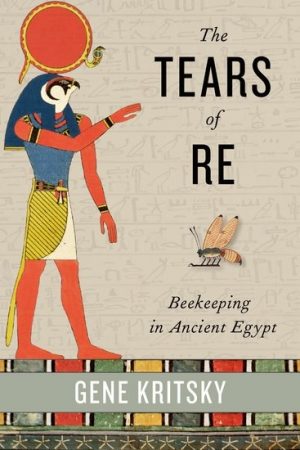
Hardback
Original price was: £34.95.£30.95Current price is: £30.95.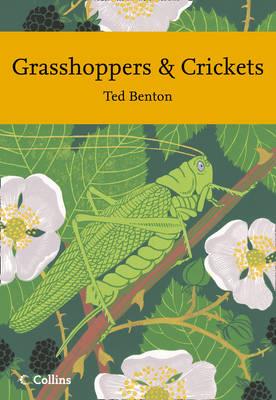
Paperback
Original price was: £30.00.£22.00Current price is: £22.00.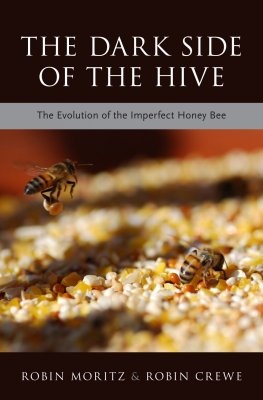
Hardback
Original price was: £97.00.£69.00Current price is: £69.00.
Paperback
£7.95
Paperback
£29.75
Paperback
£23.95
Reviews
There are no reviews yet.