


We ship worldwide - see checkout for options

Exceptional customer service trusted by 100's
£199.95
We ship worldwide - see checkout for options
Exceptional customer service trusted by 100's
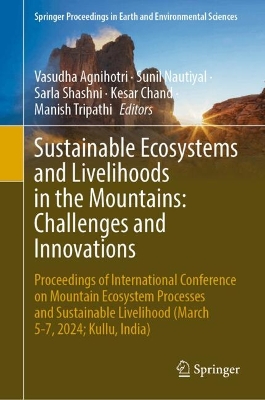
This book contributes to understanding mountain-specific environmental issues and studies conducted to address these challenges at the ecosystem and community levels. Mountain ecosystems are distinctive and provide numerous services in the form of fresh water, fertile soil, and bioresources to ethnic communities as well as to populations residing in downhill areas. This unique landscape encompasses approximately 27% of the Earth’s surface. It harbors about half of the world’s biodiversity hotspots and 30% of all key biodiversity areas, as well as vital genetic resources for locally adapted crops and livestock. Mountains play a crucial role in influencing climate activities at regional and global levels, by regulating air circulation, precipitation, and temperature variations. Due to the spatio-temporal changes in climatic conditions in the mountains and limited resource availability, local inhabitants have developed traditional practices for agriculture, livestock management, forestry, water utilization, and land use systems. The mountain ecosystem directly or indirectly affects the populations residing in downstream areas. Globally, mountains are facing numerous challenges including water scarcity, land degradation, biodiversity loss, food insecurity, increasing pollution, migration, environmental hazards (including disasters, earthquakes, floods, landslides, avalanches, rapid melting of glaciers), and forest degradation. These issues are impacting the lives of mountain inhabitants as well as the populations residing in the vicinity of mountains. Thus, understanding the mountain ecosystem and related processes is imperative.
| Weight | 0.5 kg |
|---|---|
| Author | |
| Editor | |
| Photographer | |
| Format | |
| Illustrators | |
| Publisher |
Only logged in customers who have purchased this product may leave a review.

Hardback
£1.95
Hardback
Original price was: £20.00.£18.00Current price is: £18.00.In Stock

Paperback
£8.95 Book
£72.00
Hardback
Original price was: £219.95.£210.00Current price is: £210.00. Paperback
£6.00 Paperback
£40.00 Paperback
£6.00
Reviews
There are no reviews yet.