


We ship worldwide - see checkout for options

Exceptional customer service trusted by 100's
£18.00
We ship worldwide - see checkout for options
Exceptional customer service trusted by 100's
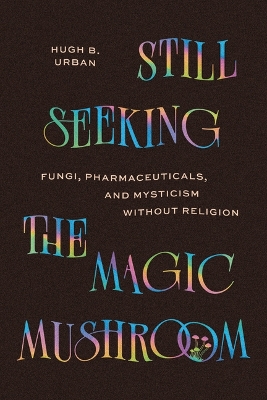
A sweeping cultural history of our yearning for psychedelics to free us from both modern life and traditional religion.
In 1957, Life Magazine published an article called “Seeking the Magic Mushroom” about a Mexican healing ritual centered on an obscure psychedelic: Psilocybe mushrooms. Readers raced to experiment with the drug for their own spiritual, therapeutic, and recreational purposes until a psychedelic wave swept the nation. Today, though psilocybin has been transformed from a sacred fungus into a pharmaceutical product, many people still turn to the enigmatic mushroom to encounter profound spiritual experiences without the baggage of traditional religion.
In Still Seeking the Magic Mushroom, Hugh B. Urban examines the alluring promise of mysticism without religion. With psychedelics, one need not fast, flagellate, or even worship a god to encounter the transcendent; a carefully timed ingestion of psilocybin will suffice. But, Urban argues, stripping the trip from its religion came at a cost: the erasure of Indigenous culture and the eventual commercialization and scientification of the psychedelic underground. Urban shows that psychedelic mushrooms, far from the fringe or countercultural margins, have been central players in shaping American attitudes toward religion and science over the last century. He argues that our love affair with the intoxicating fungus reveals a deep frustration with a disenchanted world, desire for meaning beyond religion, yearning for nature amid ecological crisis, faith in science to save us, and the relentless power of capitalism to turn everything into commodities.
| Weight | 0.454 kg |
|---|---|
| Author | |
| Format | |
| Publisher |
Only logged in customers who have purchased this product may leave a review.
Hardback
Original price was: £51.00.£24.50Current price is: £24.50.
Paperback
£0.00
Paperback
£0.00
Hardback
£0.00
Paperback
Original price was: £25.95.£19.95Current price is: £19.95.In Stock

Paperback
£14.50
Reviews
There are no reviews yet.