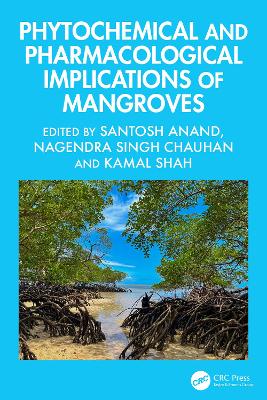
Mangrove ecosystems represent one of nature’s most dynamic interfaces between terrestrial and marine environments. Over the past few decades, these resilient plants have drawn increasing scientific attention for their remarkable phytochemical diversity and pharmacological potential. Phytochemical and Pharmacological Implications of Mangroves presents a comprehensive exploration of the chemical and therapeutic attributes of mangroves and their associated microbiota. This volume integrates fundamental and applied research to highlight the significance of mangrove-derived natural products in drug discovery and biomedical innovation. Key Features: · Part I: Introduction- Provides an overview of current trends and future prospects in mangrove research, with emphasis on ecological relevance and emerging biotechnological applications. · Part II: Phytochemical Implications of Mangroves- Examines the occurrence, distribution, and biological significance of diverse secondary metabolites, including flavonoids, terpenoids, steroids, alkaloids, carotenoids, lignan glycosides, anthraquinones, and fatty acids. A dedicated chapter explores mangrove-associated endophytes as potent producers of novel bioactive compounds. · Part III: Pharmacological Implications of Mangroves- Discusses the therapeutic potential of mangrove-derived metabolites in the prevention and management of major diseases such as cancer, neurodegenerative disorders, cardiovascular ailments, inflammatory bowel disease, diabetes, liver dysfunction, ophthalmic diseases, atopic dermatitis, and microbial infections. Written and reviewed by experts in phytochemistry, pharmacology, and marine biotechnology, this book provides a detailed account of how mangrove biodiversity can be harnessed for sustainable healthcare solutions. Phytochemical and Pharmacological Implications of Mangroves serves as an invaluable reference for researchers, academicians, and professionals in the fields of natural product chemistry, pharmacognosy, marine biology, and environmental sciences.
Author Biography
Dr. Santosh Anand is an Associate Professor in the School of Applied Sciences at REVA University, with over 19 years of academic and research experience in neurophysiology and allied biomedical sciences. His research profile is strongly centered on the neurobiology of aging, oxidative stress mechanisms, and the development of phytotherapeutic and nanotechnology-based interventions for neurodegenerative disorders. Dr. Anand’s publications reflect an interdisciplinary approach that integrates neuroscience, pharmacology, and nanobiotechnology. A significant portion of his work focuses on understanding cellular and molecular pathways underlying diseases such as Alzheimer’s and Parkinson’s, with particular emphasis on lipid mediators, polyphenols, and plant-derived bioactive compounds. His studies also explore the gut–brain axis and the therapeutic potential of nutraceuticals, highlighting emerging strategies for disease prevention and management. His recent publications in high-impact journals include research on nanoformulations (e.g., green tea nanogels and PLGA nanoparticles), pharmacological reviews on compounds like lycopene, and mechanistic insights into TRP channels and neuroprotective agents. These works demonstrate a consistent focus on drug delivery systems and the enhancement of bioavailability of natural compounds for clinical applications. Earlier experimental studies conducted by Dr. Anand investigated oxidative stress modulation in aging brains, particularly through dietary supplementation and physical exercise in animal models. This line of research established foundational links between lifestyle interventions and neuroprotection. Overall, Dr. Santosh Anand’s research contributions are characterized by a translational orientation, aiming to bridge basic neuroscience with therapeutic innovation, particularly through natural products and advanced drug delivery technologies for age-associated neurological disorders. Dr. Nagendra Singh Chauhan obtained his M.Pharm, Ph.D from Department of Pharmaceutical sciences, Dr. H.S. Gour University, Sagar in 2006 and 2011. He has around 14 years of research experience. He is presently working as Senior Scientific Officer Grade-II and Government Analyst at Drugs Testing Laboratory avam Anusandhan Kendra ,Raipur, Chhattisgarh, India . He has professional Expertise in Natural Product Isolation. Hands on in various techniques like extraction, isolation, and purification of natural products from plant extracts using various chromatographic techniques for separation of compounds includes column, LC-MS, chromatography, prep. TLC, Structure Elucidation Elucidation of structure of Natural Product with the help of various techniques like UV, Mass, IR and NMR. Biological experiments: Well versed with the design, conduct and data treatment of various in vivo experiments like Aphrodisiac, antidiabetic, antistress, hairgrowth, BPH, hepatoprotective Reproductive parameters. He has written more than 100 articles published in national and international journals, 40 book chapters. He has citations more than 3000 with h-index 21 and i10 index of 32 (Google scholar) and scopus h-index 15; 669 citations. Edited 7 books with publisher like CRC press, Elsevier, Wiley and Springer.He is a member of various professional and academic bodies like Society of Pharmacognosy, International Natural Product Sciences Taskforce (INPST) society, SILAE: Società Italo-Latinoamericana di Etnomedicina (The Scientific Network on Ethnomedicine, Italy), Institutional Human ethical committee, Association of Pharmaceutical Teachers of India (APTI). Dr. Kamal Shah did his graduation from Rajiv Gandhi Proudyogiki Vishwavidyalaya, Bhopal (MP) and also awarded by Chancellor Gold Medal and Smt. Kamla Chaturvedi Memorial Award for securing 1st position in Graduation (B.Pharma). He has qualified GATE 2003 and GATE 2005 (IIT, Mumbai). In the year 2006, He did his Masters from Dr. H.S. Gour University Sagar and worked on method development for determination of pharmacological active components by UV and HPLC. He has completed his doctorate from Dr. APJ Abdul Kalam Technical University, Lucknow. Currently he is working as Associate Professor in Institute of Pharmaceutical Research, GLA University Mathura (U.P.). He has published his research work in various journals of national and international repute, and has total 30 published research papers to his credit and has more than 300 citations. He is a member of various professional and academic bodies like Association of Pharmaceutical Teachers of India (APTI), Institutional animal ethical committee (IAEC) and Board of Studies (BOS). He is reviewer of various National and International journals like Medicinal Chemistry Research, Pakistan Journal of Pharmaceutical Sciences, Journal of Sexual Medicine, Natural Product Research, African Journal of Pharmacy and Pharmacology, International Journal of Pharmacy and Pharmacology, International Research Journal of Pure and Applied Chemistry, Pharmaceutical Biology and Asian Journal of Pharmaceutics. He has also written 6 chapters and Edited 1 book. His area of interest is “Synthesis and evaluation of prodrugs of NSAIDs”.






Reviews
There are no reviews yet.