


We ship worldwide - see checkout for options

Exceptional customer service trusted by 100's
£139.95
We ship worldwide - see checkout for options
Exceptional customer service trusted by 100's
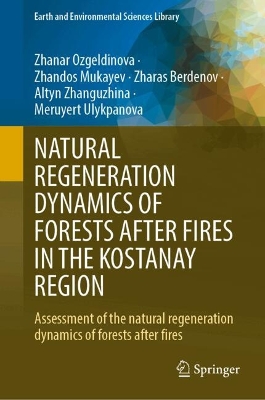
The monograph “Natural Regeneration Dynamics of Forests after Fires in the Kostanay Region” is devoted to the study of natural forest recovery processes following catastrophic wildfires. In the context of global climate change and the increasing frequency of extreme natural events, the issue of forest landscape degradation and post-fire restoration is gaining particular relevance. In recent decades, the Kostanay Region has experienced a rise in both the frequency and extent of wildfires, driven by a combination of natural and anthropogenic factors. Between 2018 and 2022, over two million hectares of forested land were affected by fire. The largest wildfire, which occurred in September 2022, damaged more than 43,000 hectares of forest stands and caused significant socio-economic damage. The study begins with an overview of the physical and geographical conditions of the research area. The natural characteristics of the forest-growing province are described in detail, and the geobotanical districts and regions where fieldwork was conducted from 2023 to 2025 are identified. Sample plots were established across different geobotanical districts, allowing coverage of a wide range of forest landscapes that vary in climate, relief, soil, and vegetation. Particular attention is given to analyzing the natural factors and conditions contributing to wildfire occurrences. Based on remote sensing and geographic information system (GIS) analysis, twelve key factors were identified and mapped. These include meteorological conditions, geomorphology, forest fuel composition, moisture levels, and the degree of anthropogenic impact. Weighting coefficients were assigned to each factor, enabling an integrated assessment of natural fire hazard and the zoning of the region according to risk level. A crucial section of the monograph focuses on evaluating the fire resistance of the region’s forest-forming tree species. Using pine stands as a case study, the analysis includes parameters such as stand diameter, root system depth, understory density, fuel load, and the presence of deciduous species. The developed methodology provided an objective assessment of potential forest vulnerability and identified the key factors contributing to fire resilience. A significant portion of the research is dedicated to investigating changes in forest population structure following wildfire impact. The use of spectral indices and satellite image interpretation methods made it possible to trace the dynamics of stand density, age, and height structure. The findings indicate that post-pyrogenic processes are mosaic in nature, with regeneration heavily dependent on local conditions, the time elapsed since the fire, and the intensity of the fire’s impact.
| Weight | 0.5 kg |
|---|---|
| Author | Berdenov| Zharas, Mukayev| Zhandos, Ozgeldinova| Zhanar, Ulykpanova| Meruyert, Zhanguzhina| Altyn |
| Editor | |
| Photographer | |
| Format | |
| Illustrators | |
| Publisher |
Only logged in customers who have purchased this product may leave a review.
Paperback / softback
£19.00
Other digital
£65.00
Paperback
Original price was: £89.95.£84.95Current price is: £84.95.
Paperback
£20.00
Spiral bound
£10.00
Paperback
£7.50
Paperback
£7.50 Paperback / softback
£16.00
Reviews
There are no reviews yet.