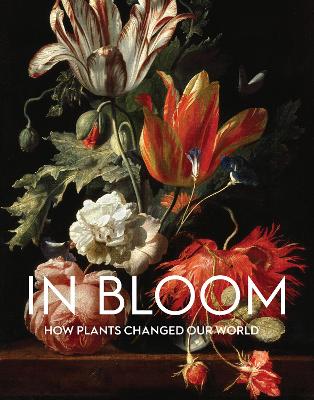

In Bloom: How Plants Changed Our World

£25.00

Available for Pre-order. Due March 2026.

In Bloom: How Plants Changed Our World Editors: Shailendra Bhandare, Stephen Harris, Francesca Leoni Format: Paperback / softback First Published: Published By: Ashmolean Museum
string(3) "224"
Pages: 224 Illustrations and other contents: 25 Illustrations, black and white; 120 Illustrations, color Language: English ISBN: 9781910807743 Categories: , , ,

A journey through art and material culture on the transformational impact of plants and plant collecting. Accompanies a major exhibition to be held at the Ashmolean from March to the end of August 2026.

Weight0.72688 kg
Author
Editor
Photographer
Format

Illustrators
Publisher

Reviews

There are no reviews yet.

Only logged in customers who have purchased this product may leave a review.
Author Biography

Francesca Leoni has been curator of Islamic art at the Ashmolean Museum since 2011 (Yousef Jameel Curator, 2011–16). Prior to Oxford, she held curatorial, research and teaching posts at the Museum of Fine Arts, Houston (2008–11), Rice University (2008–10) and the Metropolitan Museum of Art, New York (2007–8). Her interests include book arts; cross-cultural exchanges between the Islamic world, Europe and Asia; the history and circulation of technologies; occultism and divination; and modern and contemporary art from the Middle East. Shailendra Bhandare is Assistant Keeper, South Asian and Far-eastern Numismatics and Paper Money Collections, a Fellow of St Cross College and a member of Faculty of Oriental Studies. He started his career as a Numismatist with a visiting fellowship at the Fitzwilliam Museum, University of Cambridge. He was then appointed as a post-doctoral fellow of the Society for South Asian Studies, and worked as a curator in the British Museum on the coins of Later Mughals and the Indian Princely States. He was appointed as curator of coins in the Ashmolean Museum in 2002. Professor Stephen Harris is an expert on the use of molecular markers in evolutionary and conservation biology, especially hybridisation, polyploidy, the evolutionary consequences of human-mediated plant movement and conservation genetics. He is also interested in the problems of using herbarium specimens as a source of DNA for evolutionary studies, and the history of botany.