


We ship worldwide - see checkout for options

Exceptional customer service trusted by 100's
£135.00
We ship worldwide - see checkout for options
Exceptional customer service trusted by 100's
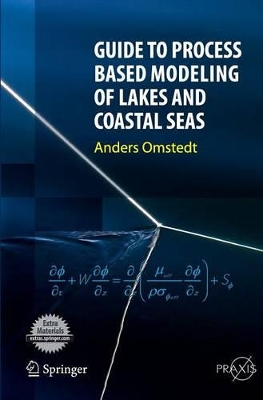
Mounting concern about the influence of humans on climate and environmental conditions has increased the need for multi-disciplinary modeling efforts, including systems such as oceans, costal seas, lakes, land surfaces, ice, rivers and atmosphere. This unique book will stimulate students and researchers to develop their modeling skills and make model codes and data transparent to other research groups. The book uses the general equation solver PROBE to introduce process oriented numerical modeling and to build understanding of the subject step by step. PROBE is a general equation solver for one-dimensional transient, or two-dimensional steady, boundary layers. By the construction of nets of sub-basins the book illustrates how the process based modeling can be extended, complementing three-dimensional modeling. The equation solver has been used in many applications, particularly in Sweden and Finland with their numerous lakes, archipelago seas, fjords, and coastal zones. It has also been used for process studies in the Arctic and in the Mediterranean Sea and the approach is general for applications in many other environmental applications…more on http:// springer.com/978-3-642-17727-9.
| Weight | 0.673 kg |
|---|---|
| Author | |
| Editor | |
| Photographer | |
| Format | |
| Illustrators | |
| Publisher |
Only logged in customers who have purchased this product may leave a review.

Hardback
£50.00 Paperback
£7.50 Spiral bound
£40.00 Hardback
£39.00 Paperback
£30.00 Hardback
£39.95 Hardback
£95.00

Reviews
There are no reviews yet.