


We ship worldwide - see checkout for options

Exceptional customer service trusted by 100's
£72.95
We ship worldwide - see checkout for options
Exceptional customer service trusted by 100's
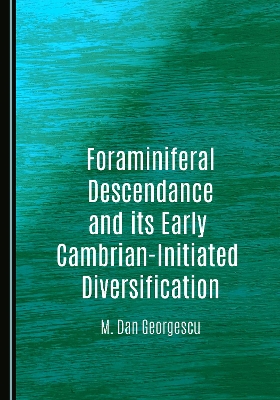
The evolution of foraminifers began in the Early Cambrian times, circa 520 million years ago, and our data indicates the earliest representatives had an agglutinated test wall, consisting of small particles bounded by an organic or inorganic cement. The group diversified shortly after their evolutionary occurrence and this process continues even today. In this book, a highly accurate framework of the foraminiferal descendence is achieved by recognizing theancestor–descendant relationships following a mixture of features, morphological resemblances given by the common ancestry and differences as the result of the divergent evolutionary process. The new methodology indicates that the group evolved calcareous walls, multichambered tests and partitioned chamber interiors on multiple occasions. The iterative development of these features, which are paramount in traditional classifications, indicates that the classical classification methodology should be abandoned, marking by this a shift towards declassification and descendence-based grouping of the foraminiferal units.
| Weight | 0.4816216 kg |
|---|---|
| Author | |
| Editor | |
| Photographer | |
| Format | |
| Illustrators | |
| Publisher |
Only logged in customers who have purchased this product may leave a review.
Paperback
£445.00

Hardback
£11.95
Hardback
Original price was: £16.99.£16.95Current price is: £16.95.
Hardback
£22.95
Hardback
£149.95
Paperback
Original price was: £39.00.£31.50Current price is: £31.50.In Stock


Reviews
There are no reviews yet.