


We ship worldwide - see checkout for options

Exceptional customer service trusted by 100's
£149.95
We ship worldwide - see checkout for options
Exceptional customer service trusted by 100's
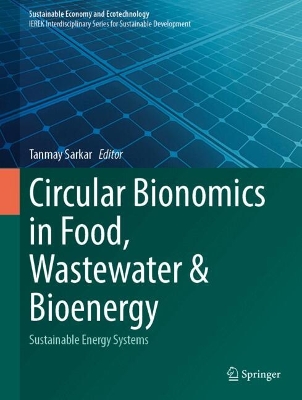
This book presents a comprehensive, transdisciplinary exploration of how food science, wastewater resource recovery, and bioenergy systems can be strategically integrated within a circular bioeconomy framework. In response to the mounting global challenges posed by climate change, population expansion, urbanization, and resource scarcity, there is a growing demand for innovative solutions that align environmental sustainability with economic viability. This volume addresses that need by offering holistic insights into creating closed-loop systems that reduce waste, recover valuable resources, and enhance overall system resilience. Bringing together leading voices from academia, industry, and research institutions, the book bridges traditionally siloed disciplines such as food technology, environmental engineering, microbiology, and circular economy policy. It combines theoretical foundations with practical applications to illuminate the transformative potential of circular bionomics in modern food and energy systems. Through a combination of original research, case studies, and applied frameworks, the book showcases the interconnectivity of food production, waste management, and renewable energy generation. It emphasizes that sustainable development can no longer be pursued in isolation but must instead adopt integrated approaches that consider both environmental performance and socio-economic impacts. Key Themes and Features, Key chapters delve into essential topics including: • Circular bioeconomy principles and design frameworks • Nutrient and energy recovery from agro-industrial and municipal wastewater streams • Upcycling of food and processing by-products into high-value materials • Microbial and enzymatic pathways for bioconversion of organic waste • Technological integration of biorefineries within food supply chains • Life cycle assessment (LCA) tools and sustainability evaluation metrics • Policy and socioeconomic dimensions shaping resource recovery initiatives • Innovations in waste-to-energy systems and circularity in food systems This book sets out to solve the persistent problem of fragmented sustainability practices by demonstrating how synergistic strategies can generate both ecological and economic benefits. For instance, the conversion of food waste into bio-based materials or energy not only minimizes environmental burdens but also creates new revenue streams and promotes food system resilience. Similarly, the recovery of nutrients from wastewater can close nutrient loops in agriculture, reducing reliance on synthetic fertilizers and mitigating pollution. The integration of these technologies and methodologies is framed within real-world applications and supported by data-driven analyses, making the content accessible and actionable for a diverse audience. It also explores the role of digital innovations, emerging policy instruments, and stakeholder engagement mechanisms that support the transition toward a truly circular economy. Intended Audience Designed for researchers, engineers, environmental scientists, policy-makers, sustainability practitioners, and postgraduate students, this book offers both depth and breadth. It serves as a resource for those seeking to understand the scientific underpinnings of circular bioeconomy initiatives, as well as those interested in implementing practical, scalable solutions across sectors. Ultimately, Circular Bionomics in Food, Wastewater & Bioenergy contributes to advancing the global transition toward sustainable food and energy systems by highlighting interdisciplinary innovation, systems thinking, and cross-sector collaboration as critical drivers of change.
| Weight | 1.324134 kg |
|---|---|
| Author | |
| Editor | |
| Photographer | |
| Format | |
| Illustrators | |
| Publisher |
Only logged in customers who have purchased this product may leave a review.
Hardback
£138.00
Hardback
Original price was: £25.00.£18.75Current price is: £18.75.
Hardback
£125.00
Hardback
£30.00
Hardback
£107.50
Paperback
Original price was: £43.00.£34.95Current price is: £34.95.
Hardback
£147.50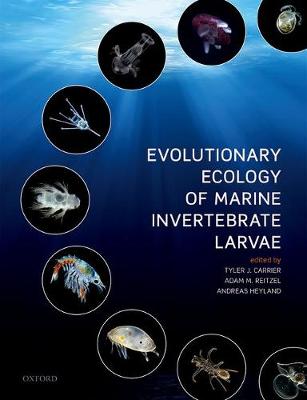
Paperback / softback
£67.00
Reviews
There are no reviews yet.