


We ship worldwide - see checkout for options

Exceptional customer service trusted by 100's
£219.95
We ship worldwide - see checkout for options
Exceptional customer service trusted by 100's
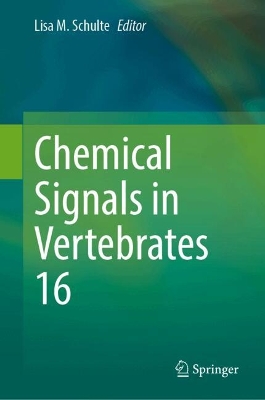
Chemical communication is the evolutionarily oldest form of communication in the animal kingdom. Pheromones and other chemical substances are used for both intra- and interspecific communication and have a strong influence on the behaviour and/or physiology of animals. The use of pheromones for chemical communication is known in almost all animal groups and the exchange of chemical substances is being researched using multiple methods – working directly with the animals (e.g. using behavioural observations and experiments), and on the chemical substances that the animals use to communicate (e.g. through chemical analyses or proteomics). While research on chemical signals in invertebrates (especially insects) is already well advanced, the chemical signals that vertebrates exchange with each other are usually much more complex and because of this often less well researched. It is therefore of great importance to create a platform for regular exchange between scientists whose research focusses on the chemical world of mammals (including humans), birds, reptiles, amphibians and fish. The international conference “Chemical Signals in Vertebrates” (CSiV) has been held for almost 50 years to bring together scientists from all over the world who work on chemical communication in vertebrates. It takes place every three years in a wide variety of countries, such as England, the USA, France, Poland – and also Germany (Berlin, 2011). The 16th CSiV conference, which took place in 2024, was held in Germany again. This time in Frankfurt. The “Wildlife and Zoo Animal Biology and Systematics” working group at the Institute of Ecology, Evolution and Diversity (Department of Biosciences) at Goethe University Frankfurt organised the conference this year. This proceeding summarises the important findings from the 5-day event which consisted of scientific presentations (divided into various symposia), with three plenary speakers and a poster session where young scientists presented their research.
| Weight | 0.9142675 kg |
|---|---|
| Author | |
| Editor | |
| Photographer | |
| Format | |
| Illustrators | |
| Publisher |
Only logged in customers who have purchased this product may leave a review.

Paperback
Original price was: £16.95.£13.95Current price is: £13.95.In Stock

Paperback
£5.95
Paperback
Original price was: £19.95.£12.75Current price is: £12.75.In Stock
Paperback / softback
£26.00
Paperback / softback
£26.00
Paperback
£19.95
Hardback
£13.95
Paperback / softback
£30.00

Reviews
There are no reviews yet.