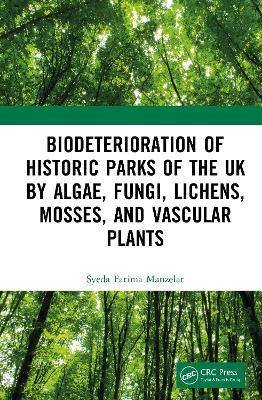

Biodeterioration of Historic Parks of the UK by Algae, Fungi, Lichens, Mosses, and Vascular Plants

£175.00

Available for Pre-order. Due March 2026.

Biodeterioration of Historic Parks of the UK by Algae, Fungi, Lichens, Mosses, and Vascular Plants Author: Format: Hardback First Published: Published By: Taylor & Francis Ltd
string(3) "152"
Pages: 152 Illustrations and other contents: 7 Tables, black and white; 4 Line drawings, black and white; 36 Halftones, black and white; 40 Illustrations, black and white Language: English ISBN: 9781041068044 Categories: , , , , , , , , , ,

Historic parks are living treasures, but they are under constant threat from biodeterioration. The book Biodeterioration of Historic Parks of the UK by Algae, Fungi, Lichens, Mosses, and Vascular Plants, explores how a range of organisms contribute to the decay of historic landscapes. Through detailed fieldwork and laboratory analysis, the book examines how these biological agents interact with stone, wood, and other park features, influencing chemical reactions, physical wear, and structural weakening. The book combines rigorous science with practical conservation insights, offering strategies to protect and preserve these culturally and ecologically significant sites. Features: • Examines the impact of biota such as algae, fungi, lichens, mosses, and vascular plants on cultural landmark degradation. • Highlights interdisciplinary approaches, bridging biology, conservation and physical sciences to address biodeterioration. • Discusses environmentally conscious techniques for protecting heritage structures while minimizing ecological footprints. • Presents case studies from Campbell Park and Great Linford Manor Park, showcasing strategies to mitigate biodeterioration. • Provides actionable insights for practitioners, researchers, and enthusiasts committed to cultural heritage preservation. This book is an essential resource for conservationists, heritage managers, botanists, and ecologists seeking a comprehensive understanding of the forces that threaten historic parks—and guidance on safeguarding them for future generations.

Weight0.2993328 kg
Author

Editor
Photographer
Format

Illustrators
Publisher

Reviews

There are no reviews yet.

Only logged in customers who have purchased this product may leave a review.
“Biodeterioration of Historic Parks of the UK by Algae, Fungi, Lichens, Mosses, and Vascular Plants brings together scientific rigor and conservation practice in an outstanding way. Dr. Manzelat provides an impressive interdisciplinary perspective, combining botany, ecology, and heritage science. The book is not only a vital resource for researchers and conservationists but also a practical guide for those working on the preservation of historic landscapes.” — Prof. Rana Kausar Former Head, Department of Botany, Osmania University, India “This book is an invaluable contribution to the study of historic landscapes. By documenting the role of algae, fungi, lichens, mosses, and vascular plants in the deterioration of heritage parks, Dr. Manzelat has highlighted an often-overlooked dimension of conservation science. Her meticulous research and detailed analysis will be of great interest to scientists, policymakers, and heritage managers alike.” — Dr. Prathibha Devi B. Professor of Botany, Osmania University, India “Dr. Manzelat’s work represents a rare and significant integration of science and history. This book not only deepens our understanding of the biodeterioration processes affecting historic parks but also provides actionable recommendations for conservation practice. It is a must-read for anyone interested in heritage preservation, ecological management, and environmental sustainability.” — Ms. Marilyn Hurrell Director of Science, Shenley Brook End School, Milton Keynes, UK “Comprehensive in scope and rich in detail, Dr. Manzelat’s book offers an authoritative exploration of how biological agents interact with and impact historic parks. Her dedication to research and her ability to weave scientific findings into the broader context of cultural heritage conservation make this work an essential reference. It will inspire both current researchers and future generations of conservationists.” — Dr. Isra Syed Siraj GP Specialty Trainee,Nhs, UK

Author Biography

Syeda Fatima Manzelat is currently based in the United Kingdom and has previously served as Associate Professor at Misurata University, Libya, and Jizan University, Saudi Arabia, alongside teaching at various schools and a Sixth Form College in the UK. A Gold Medalist from the century-old Osmania University, India, she is a highly accomplished researcher, educator, and academic leader. She has published over fifteen research papers in leading international journals, many as a single author, and serves as a reviewer for Web of Science–indexed journals of high repute. Her expertise spans microbiology, mycology, plant pathology, phycology, biotechnology, phytochemistry, and tissue culture, with applications ranging from agriculturally important crops to conservation and heritage studies. Beyond research and teaching, she has organized lectures, seminars, and conferences, actively contributing to academic communities. She is well-travelled, with experiences in Saudi Arabia, Libya, Denmark, Dubai, Egypt, Turkey, and the UK, enriching her perspective and reinforcing her appreciation for diverse cultures.