


We ship worldwide - see checkout for options

Exceptional customer service trusted by 100's
£120.00
We ship worldwide - see checkout for options
Exceptional customer service trusted by 100's
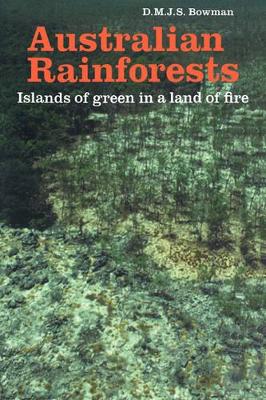
Why do Australian rainforests occur as islands within the vast tracts of Eucalyptus? Why is fire a critical ecological factor in every Australian landscape? What were the consequences of the ice-age colonists use of fire? In this original and challenging book, David Bowman critically examines hypotheses that have been advanced to answer these questions. He demonstrates that fire is the most critical factor in controlling the distribution of rainforest throughout Australia. Furthermore, while Aboriginal people used fire to skilfully manage and preserve habitats, he concludes that they did not significantly influence the evolution of Australia’s unique flora and fauna. This book is a comprehensive overview of the diverse literature that attempts to solve the puzzle of the archipelago of rainforest habitats in Australia. It is essential reading for all ecologists, foresters, conservation biologists, and others interested in the biogeography and ecology of Australian rainforests.
| Weight | 0.705 kg |
|---|---|
| Author | |
| Editor | |
| Photographer | |
| Format | |
| Illustrators | |
| Publisher |
Only logged in customers who have purchased this product may leave a review.
Hardback
Original price was: £101.00.£84.00Current price is: £84.00.
Hardback
Original price was: £147.00.£119.00Current price is: £119.00.
Hardback
£105.00
Hardback
£157.50
Paperback
Original price was: £74.95.£69.95Current price is: £69.95.In Stock
Paperback
Original price was: £56.95.£44.50Current price is: £44.50.
Paperback
Original price was: £56.00.£51.95Current price is: £51.95.
Reviews
There are no reviews yet.