


We ship worldwide - see checkout for options

Exceptional customer service trusted by 100's
£54.95
We ship worldwide - see checkout for options
Exceptional customer service trusted by 100's
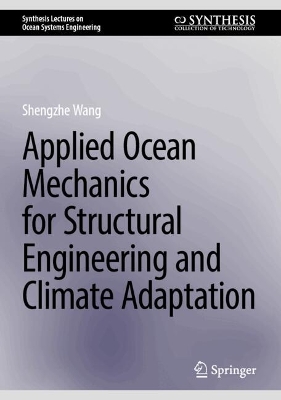
This book introduces the theory and applications of ocean mechanics at a senior undergraduate or graduate level without assuming prior knowledge of hydrodynamics, wave theory, or related subjects. The objective is to equip students, educators, researchers, and designers with the necessary tools to promote infrastructure solutions that are more resilient and adaptable to ocean hazards exacerbated by a changing climate. The book contains four main sections: (1) mathematical fundamentals, (2) mechanics of surface waves, (3) wave interactions with fixed structures, and (4) wave interactions with floating structures. The first chapters review important mathematical concepts relating to fluid dynamics before introducing the fundamental mechanics of surface gravity waves. Readers are next introduced to the prediction of wave forces on different structural systems produced by wind-driven waves and tsunamis. Theories pertaining to wave attenuation over submerged vegetation are further presented to demonstrate the potential of “green” infrastructure as a sustainable approach to climate adaptation. The final chapters introduce the design of floating structures, with discussions focusing on hydrostatic stability, rigid-body dynamics, as well as comfort criteria for floating buildings.
| Weight | 0.5 kg |
|---|---|
| Author | |
| Editor | |
| Photographer | |
| Format | |
| Illustrators | |
| Publisher |
Only logged in customers who have purchased this product may leave a review.

Paperback / softback
£16.95
Paperback / softback
£9.95
Paperback / softback
£25.00
Paperback / softback
£8.95
Hardback
£138.00
Paperback
Original price was: £43.00.£34.95Current price is: £34.95.
Paperback / softback
£67.00 Paperback / softback
£45.00

Reviews
There are no reviews yet.