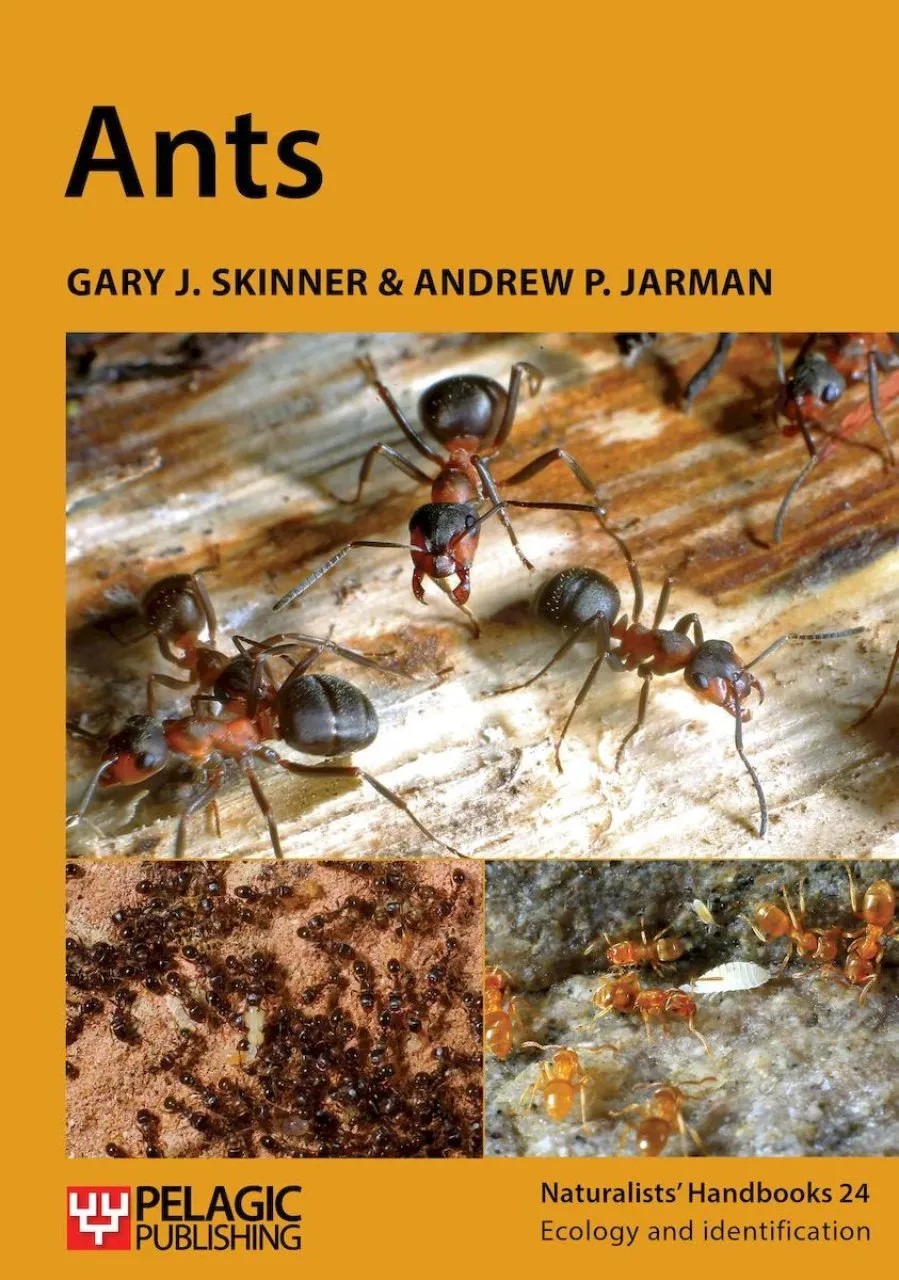
Ants are found everywhere from garden to mountaintop. They are at their most diverse in the tropics, but that does not make the 61 species of our part of the world any less fascinating or significant. As social insects, ants have fascinating life histories. Ecologically, they are highly important and influential. From tiny guest ants living in the nests of bigger species to gigantic wood ant mounds with hundreds of thousands of workers, there is a lifetime of possibility for study.
This second edition of Ants covers the general biology and ecology of species occurring in Britain and Ireland, including the Channel Islands. The book presents photographs and descriptions of workers for all 61 species on the regional list, together with distribution maps. There is also an account of some of the exotic species that may turn up in heated buildings. The extensively illustrated keys deal with workers, queens and males of all the species. These have been specially written and are the first comprehensive keys since those of the first edition almost 30 years ago. There are also quick-check keys to workers and nests, as well as a detailed list of kit suppliers and an extensive reference list.
Ants are among the most familiar of insects and can form a crucial part of their ecosystem, having an impact far greater than their small individual size would lead us to expect. This book is for anyone wanting to learn more about these endlessly interesting insects, by reading and by applying some of the methods discussed to make new discoveries.
This book is the one I would recommend for anyone looking to get into ants, or build their interest in this most fascinating group of insects. -- Steve Price * Sorby Natural History Society Newsletter * This book will undoubtedly and deservedly become the reference book of choice for British myrmecologists, as was its predecessor. It is a delight to read and I am certain to return to it time and again for its reliable keys and as a point of reference. -- Gino Brignoli * BWARS Newsletter * Had this book been available when I studied ant ecology and behaviour, at university and during my subsequent teaching career, it would have been extensively used, and I would certainly recommend it... an excellent resource. -- Dr EJM Evesham * Insectes Sociaux * I found this book to be thoroughly enjoyable. Like most books in the Naturalists’ Handbooks series, this might be one of several books you own on the subject, or it might be the only book you ever need on the topic. -- Andy Chick * AES Bulletin * Overall, this second edition is exceptionally well-written and accessible to the general naturalist while maintaining the necessary technical detail for serious entomologists. The style is engaging, and the examples are rooted in the local ant fauna, making it an indispensable resource for those interested in British and Irish myrmecology. -- Heather Campbell * British Journal of Entomology and Natural History * Two seasoned hymenopterists I know have finally steeled themselves to take a closer look at ants as a result of this book being published and I am sure that many more people will do the same. The information contained therein should not disappoint. -- Adrian Knowles * British Wildlife * This new edition will serve as a welcome, unifying resource for amateur and professional myrmecologists -- Aaron M. Ellison * Myrmecological News * Ants finds an impressive balance between richness of content and portability. The book is beautifully illustrated with countless colour photographs, and features clear, accessible figures and tables highlighting the fascinating diversity of traits across ant species... The more I read, the more I liked it. It’s engaging, informative, and I think it has something to offer for all levels of reader. -- Juliet Turner * Antenna * Overall, although the book focuses almost exclusively on ants in Britain and Ireland, it is also useful for both novice and experienced myrmecologists in continental Europe, and it should be in every entomological library. -- Pavel Pech * European Journal of Entomology * The second edition of Ants by Gary J. Skinner and Andrew P. Jarman stands as a comprehensive, richly illustrated, and thoroughly updated guide to the myrmecofauna of Britain and Ireland. This volume successfully balances accessible ecological description with the taxonomic rigour required by serious entomologists, cementing its place as the definitive modern resource for the 61 species found in the region. -- Roy Stewart * BNA Bulletin * Ants is to be highly recommended to any naturalist with an interest in learning more about this insect group... The excellent and very accessible identification keys in Ants will enable naturalists here to confidently work out the trickier species, and I think the keys will be widely used as the standard identification reference by ‘amateurs’ and seasoned entomologists alike for many years to come. -- Aidan O’Hanlon * The Irish Naturalists' Journal *