


We ship worldwide - see checkout for options

Exceptional customer service trusted by 100's
£109.95
We ship worldwide - see checkout for options
Exceptional customer service trusted by 100's
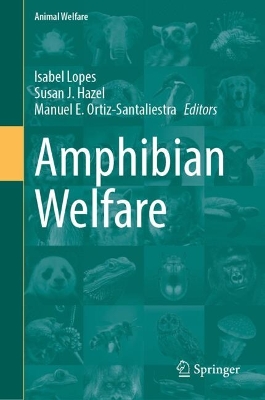
This book frames amphibian welfare relative to their free-living biology. Notwithstanding their established roles as sentinel species and experimental models, amphibians remain underrepresented within the body of systematic animal welfare science. The present volume redresses this gap through a comprehensive synthesis of extant knowledge on amphibian welfare across anthropogenic contexts, encompassing field-based manipulations and ex situ laboratory models. The expert authors articulate major welfare challenges over human-amphibian interfaces including cultural and utilitarian attitudes that influence policy and practice, field and laboratory protocols affecting stress physiology and survival as well as infectious diseases that compromise individuals and populations. Moreover, the chapters cover ethical dilemmas in managing invasive species, husbandry requirements for the animals´ needs in captivity, refinement opportunities within scientific research, and the status of experimental surrogates including in vitro models. Collectively, these contributions position amphibian welfare as a connection spanning ecotoxicology, conservation translocation, and regulatory toxicology, where targeted empirical advances in welfare state validation, captivity effects, and welfare-economy trade-offs remain imperative. As such, this volume equips researchers, veterinarians, regulators, and educators to operationalize amphibian welfare science. It is further an essential reading for amateur herpetologists, professionals in industries and institutions involved in environmental issues and nature conservation.
| Weight | 0.5 kg |
|---|---|
| Author | |
| Editor | |
| Photographer | |
| Format | |
| Illustrators | |
| Publisher |
Only logged in customers who have purchased this product may leave a review.
Paperback / softback
£47.00
Paperback
Original price was: £19.95.£12.75Current price is: £12.75.In Stock

Hardback
£13.95
Paperback
£16.50
Paperback
£12.95
Paperback
£5.95
Paperback
£19.95
Paperback
£24.95

Reviews
There are no reviews yet.