


We ship worldwide - see checkout for options

Exceptional customer service trusted by 100's
£139.95
We ship worldwide - see checkout for options
Exceptional customer service trusted by 100's
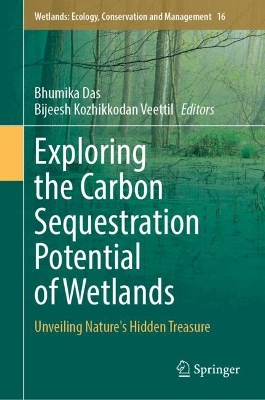
Exploring the Carbon Sequestration Potential of Wetlands: Unveiling Nature’s Hidden Treasure” investigates the crucial role wetlands play in mitigating climate change by sequestering carbon. This book is an excellent resource for environmental scientists, ecologists, policymakers, environmentalists, and students, providing a thorough assessment of wetlands’ role as natural carbon sinks and their potential to prevent global warming. The book begins with an introduction to wetlands, explaining their various types, ecological significance, and the unique conditions that make them effective at storing carbon. It outlines the biological, chemical, and physical processes involved in carbon sequestration within wetland ecosystems, providing readers with a solid foundation in wetland ecology and biogeochemistry. As the book progresses, it highlights the mechanisms by which wetlands capture and store carbon, including the accumulation of organic matter in waterlogged soils, the role of plant biomass, and the interaction with microbial communities. Detailed case studies from different geographic regions showcase the diversity of wetland types and their respective contributions to carbon sequestration, from peat bogs and mangroves to salt marshes and freshwater swamps. The book also addresses the human impacts on wetlands, such as drainage, pollution, and land-use changes, which threaten their ability to sequester carbon. It emphasizes the importance of wetland conservation and restoration efforts, presenting evidence-based strategies for enhancing the carbon sequestration capacity of these ecosystems. Practical guidance on monitoring and measuring carbon stocks in wetlands is provided, equipping readers with the tools needed for effective wetland management and research.
| Weight | 0.5 kg |
|---|---|
| Author | |
| Editor | |
| Photographer | |
| Format | |
| Illustrators | |
| Publisher |
Only logged in customers who have purchased this product may leave a review.
Paperback
£53.00In Stock
Hardback
£0.00
Paperback
Original price was: £88.00.£76.95Current price is: £76.95.
Paperback
Original price was: £59.00.£51.95Current price is: £51.95.
Paperback
Original price was: £78.00.£67.95Current price is: £67.95.
Hardback
Original price was: £88.00.£76.95Current price is: £76.95.
Paperback
£33.00
Hardback
Original price was: £120.90.£84.50Current price is: £84.50.

Reviews
There are no reviews yet.